

The Jewish Book Shelf: Tomorrow, and Tomorrow, and Tomorrow
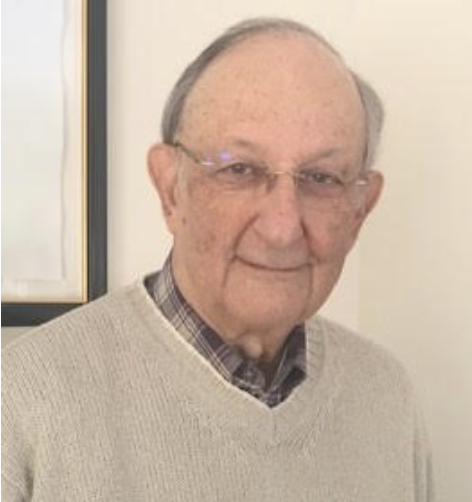
Burt Schwartz
by Burt Schwartz
[Editor's Note: The Bet Shalom Book Club will periodically recap their discussions of Jewish-themed books, so their articles now have a unifying name, “The Jewish Book Shelf.” Look for it in the future! - Eric Bressler, Editor]
The Bet Shalom Book Club recently discussed Gabrielle Zevin’s novel Tomorrow, and Tomorrow, and Tomorrow, a story that follows two childhood friends, Sam Masur and Sadie Green, who reunite in college and build a groundbreaking video-game company together. Set primarily in Boston and Los Angeles from the 1990s onward, the book uses the world of game design to explore how people create, lose, and sometimes repair connection across years of hurt, misunderstanding, and change. Though the novel is steeped in consoles, code, and pixelated worlds, its heart is deeply human, asking what it means to build a life with and alongside other people, even when love does not fit neatly into romance or family.
The four members pictured in the photo, Burt Schwartz, Leslie Laub, Lynn Benson and Rabbi Samantha Thal joined Joan Garfield, Mark Robbins, John Benson, Lauren Witebsky, Bob Davidson and Sue Ann Garvis to unpack these questions together, bringing a wide range of life experience to a book centered on the long arc of friendship. Participants reflected on how Sam and Sadie’s collaboration mirrors creative partnerships in any community: shared vision, uneven power, and the constant challenge of truly seeing the other as a person rather than as an “avatar” who meets one’s needs. That interplay of affection and resentment, loyalty and betrayal, resonated powerfully in a synagogue setting, where communal life also asks people to show up for each other across time, conflict, and change.
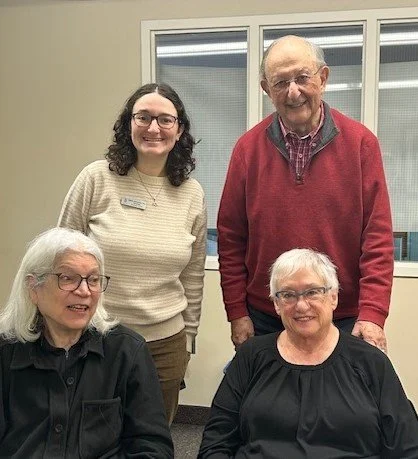
Rabbi Thal, Burt, Lynn, and Leslie
The group spent time on the book’s shifting treatment of identity—Sam’s Korean-American and working-class background, Sadie’s struggles as a woman in a male-dominated industry, and their colleague Marx’s role as both stabilizer and dreamer in the trio’s creative world. Readers connected these elements to broader conversations at Bet Shalom about privilege, inclusion, and whose stories get prioritized, noting how Zevin insists that creativity is never separate from the bodies, histories, and cultures of the people who create. Several participants commented that the novel adds new layers each time one revisits a scene, especially as grief and disability reshape the characters’ choices.
A number of members mentioned how the book touched on many Jewish themes. One example is forgiveness and the possibility of “tomorrow“ as another chance to do better, echoing broader Jewish ethical teachings.
An especially rich part of the conversation focused on the title’s Shakespearean echo—“tomorrow, and tomorrow, and tomorrow”—and how Zevin reworks its bleak meditation on time into something more hopeful. In the novel’s games, a player can try again, learning from past mistakes. But in real life the characters do not get a reset. Yet they do get opportunities for teshuvah, the slow, imperfect work of return and repair after harm. This emphasizes that while the past cannot be erased, relationships can be transformed through honest reckoning and renewed commitment.
For many in attendance, the most moving question of the evening was whether Sam and Sadie’s bond ultimately “succeeds” or “fails”—or whether those categories even apply to a relationship that spans decades, continents, and multiple forms of love. The group considered how the novel insists that partnership can be central without being romantic, and how making something together—a game, a family, a synagogue community—can be its own enduring covenant. As the Bet Shalom readers closed their books and gathered their coats, talk turned to the next selection, but Tomorrow, and Tomorrow, and Tomorrow seemed likely to linger, inviting them to keep asking, in their own lives and relationships, what they might yet build together in the tomorrows still to come.
Burt Schwartz MD, FACP