

Rosh Chodesh: A Women’s Group for the Ages

by Maura Lerner Fisher
On a recent Sunday afternoon, about 15 women gathered at Rose Quintero’s home in Eden Prairie for a 21st-century reboot of an ancient ritual. Some of the snacks were gluten-free. The candles were safely battery-powered.
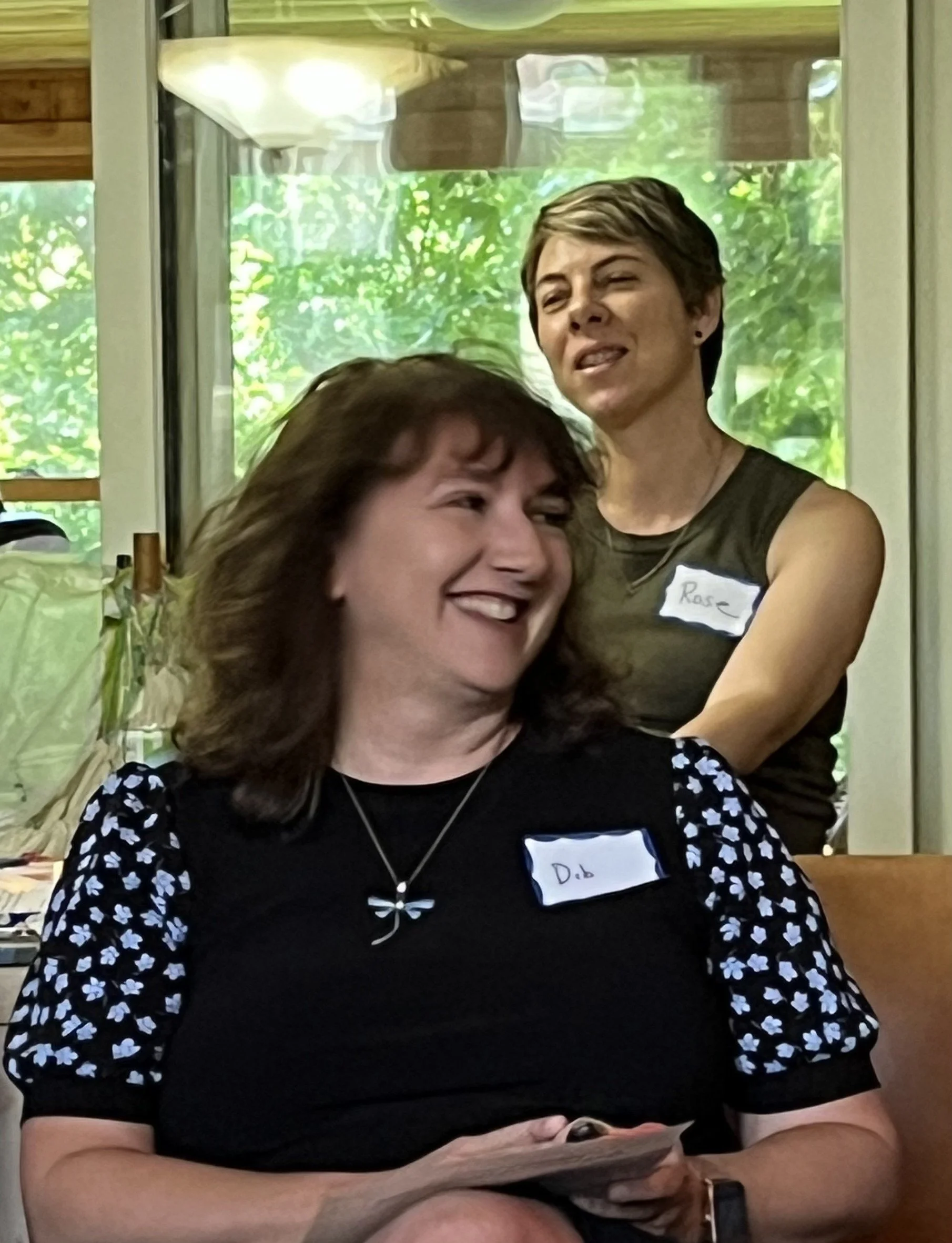
Deb and Rose
And when Cantor Tamar Havilio led them in the opening song, Hineh Ma Tov, she couldn’t help making it sound a little less …sexist. Literally, the Hebrew words extol “how pleasant it is for brothers to dwell together.”
But this was all about the sisters. “How good it is, how sweet it is,” Cantor Havilio translated, “to be together on this day."
For the last year, Cantor Havilio and Rabbi Samantha Thal have led a women’s group, known as a Rosh Chodesh, for Bet Shalom members. The name literally means “head of the month,” so the group typically meets monthly, around the new moon, at the home of a volunteer. It has no formal membership list, and it’s open to anyone who wants to share some food and time with other Jewish women.
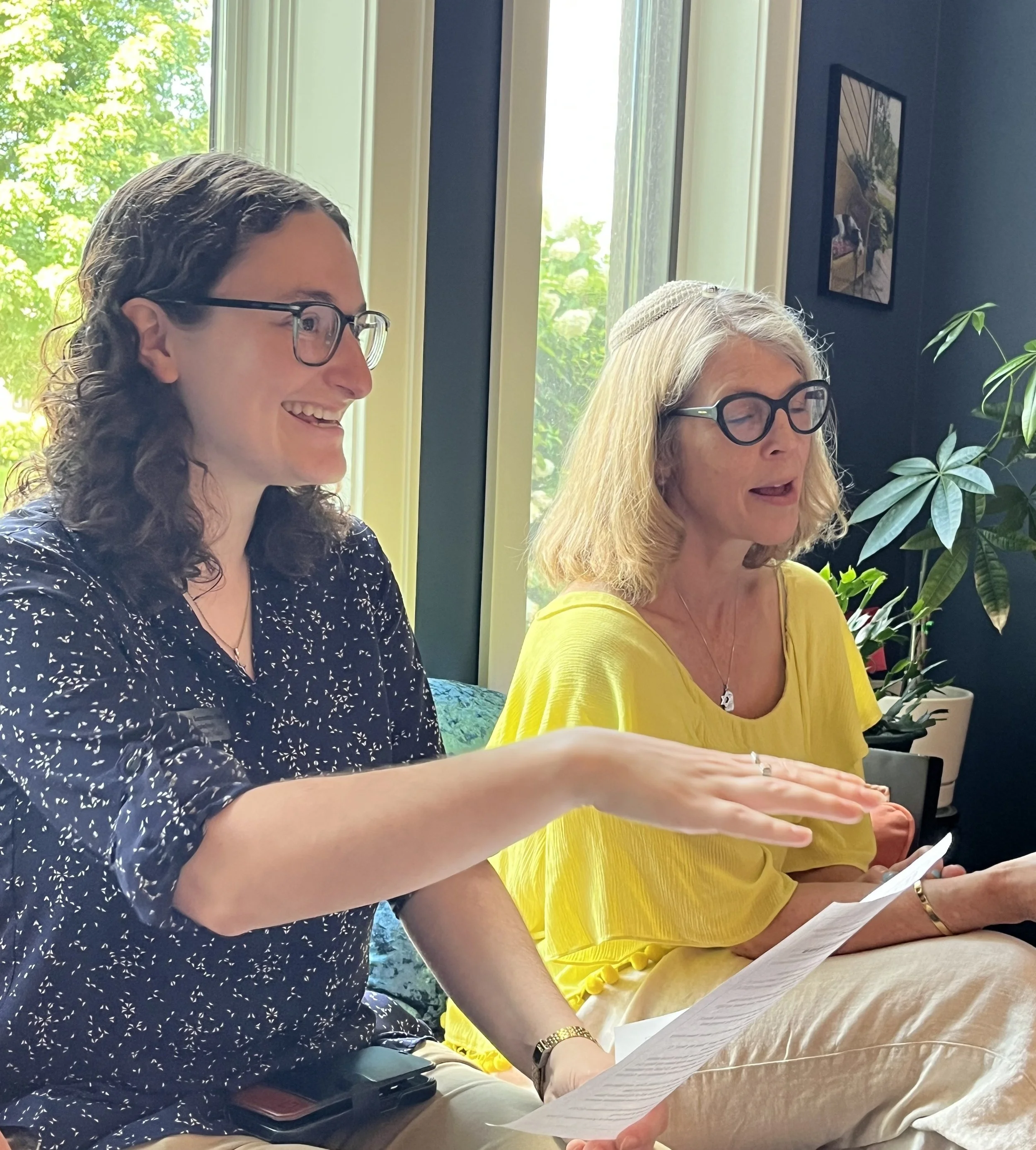
Rabbi Thal and Cantor Havilio
“Cantor (Havilio) and I wanted to do something that was a space for women getting together,” explains Rabbi Thal. “We thought there was a need for that, and that we could find meaning from that.”
Rosh Chodesh gatherings have been associated with Jewish women since Biblical times (in part, they were a nod to women’s monthly cycles). But today, they’re part of a modern movement to help women strengthen their ties in the Jewish community, and in this case, enrich their experience at Bet Shalom.
“I think, especially after the pandemic, what’s been really nice is to see that people are wanting to gather,” said Cantor Havilio. Part of the appeal, she says, is meeting in women’s homes. “We started out (meeting) at the synagogue, and it wasn’t as successful,” she said. But the home-settings have proven more inviting. “You can come anytime and feel like you will be welcome.”
At the August gathering, women introduced themselves with a distinctive ritual — holding a (flame-less) candle, and naming the mothers and grandmothers who came before them, as far back as they knew.
Rabbi Thal invited everyone to reflect on a prayer — Psalm 27, which is traditionally recited during the Hebrew month of Elul. Then Cantor Havilio handed out journals to each of the women, challenging them to take a few moments of introspection. “I’m going to start you out with little prompts,” she said. “I promise myself this year…” she said, leaving the sentence unfinished. “Just write something simple.”
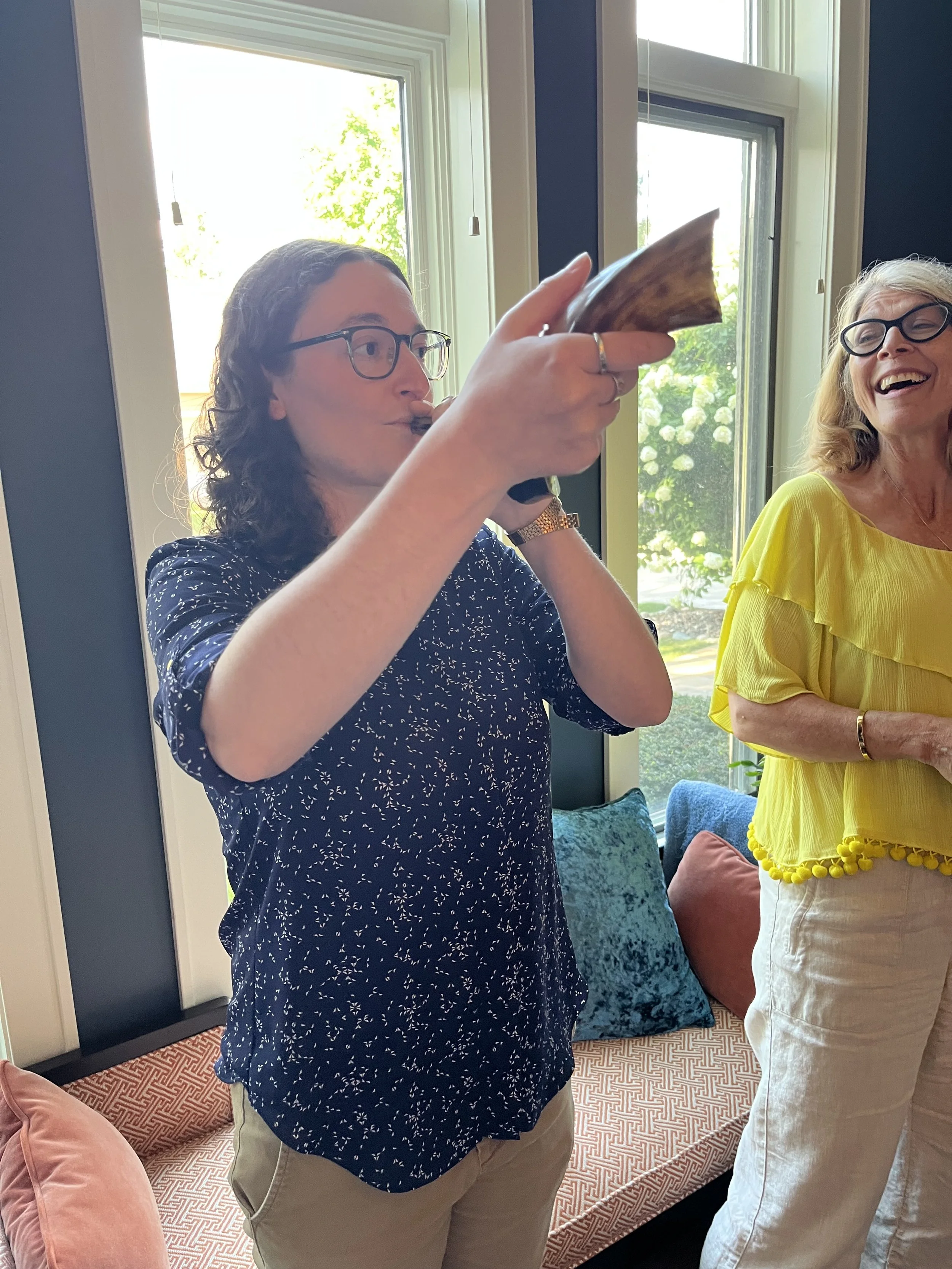
Closing Shofar Blast
After the program (which Rabbi Thal sealed by sounding the shofar, another Elul tradition), there was time for schmoozing.
Gayle Kaplan, a longtime member of Bet Shalom, said she enjoys the easy camaraderie of the Rosh Chodesh gatherings. “You don’t have to commit to going to a certain number of meetings. It’s come when you can, if you can,” she said. “It’s simply a chance to connect and get to know and maybe wind up becoming friends with someone else.”
Rebeka McBride, who joined Bet Shalom six years ago, said she was “really excited” to hear about the women’s group. “When I was in college, I actually started a Rosh Chodesh group (at) Hillel,” she said. “We’re Friday-night regulars (at Bet Shalom), but I don’t know a lot of people outside Friday nights.” The new group, she hopes, will be “another piece of the community I’m building.”
That’s exactly what the founders are hoping for. “I think that’s a really empowering thing about Rosh Chodesh,” said Cantor Havilio. “It’s learning and being together and sharing food and stories.”
For information about upcoming Rosh Chodesh meetings, email cantor.havilio@betshalom.org