
The Truth Behind the Czech Torah Scroll Myth
Dale Bluestein's New Documentary
by Maura Lerner Fisher
Dale Bluestein remembers the first time he came across the story, while admiring an old Torah scroll displayed at that time in Bet Shalom’s sanctuary. A plaque next to the display told the tale – how the Nazis collected hundreds of Torah scrolls from Czech synagogues during the Holocaust, with the ghoulish aim of creating a museum to an extinct people.
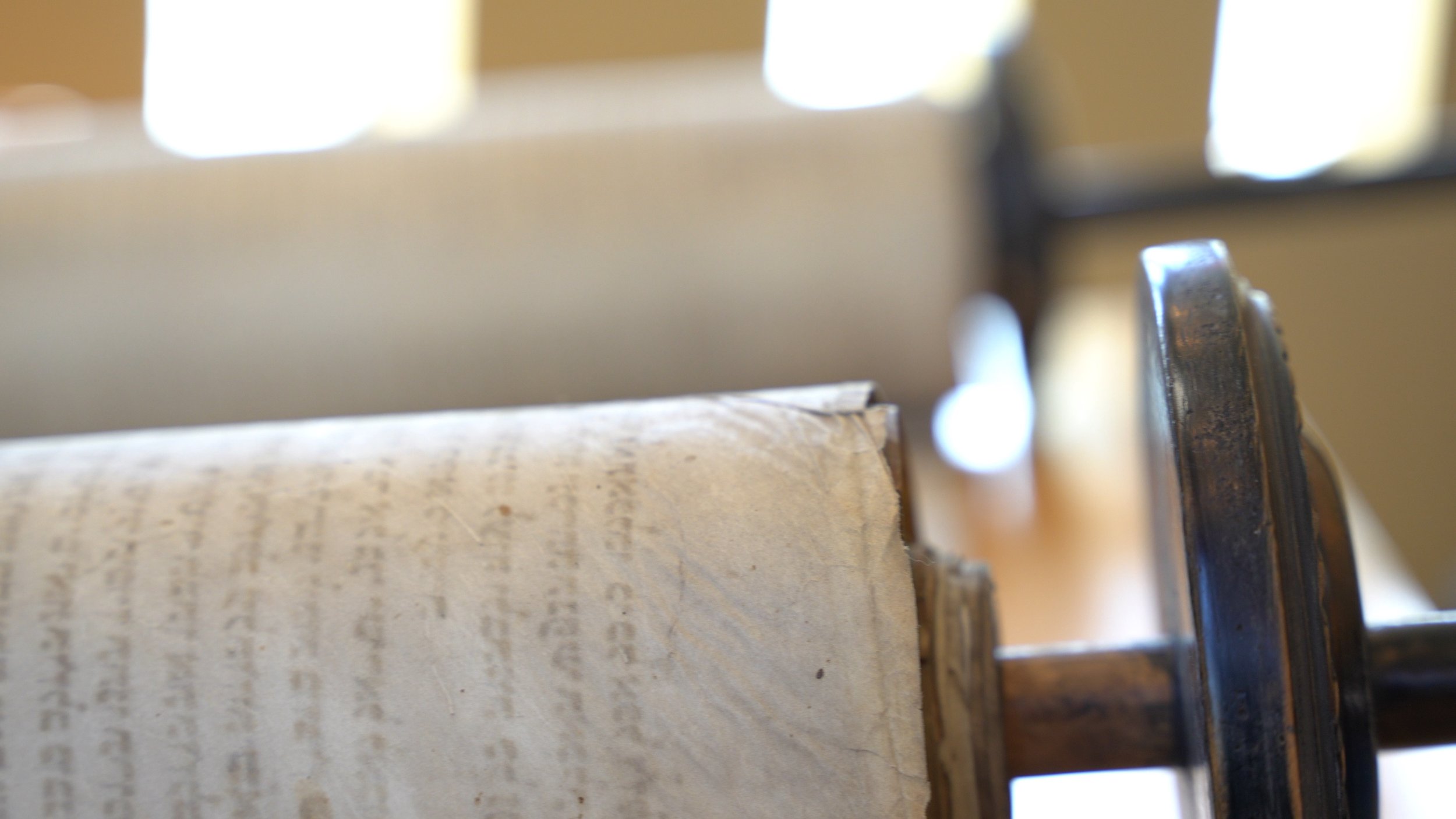
Czech Torah Scroll
And how, after the war, those same scrolls somehow found their way back to the Jewish people and synagogues around the world — including the one at Bet Shalom.
It was a mesmerizing tale. And much of it, he now says, was based on a myth.
Bluestein, a professional videographer and longtime member of Bet Shalom, spent more than a decade uncovering the true story of the Czech Torah scrolls, traveling to London, Munich, Prague and Israel in the process.
And now he’s produced a remarkable film called 1564 Stories: The Czech Torah Scrolls and the Space Between Truth and Myth.
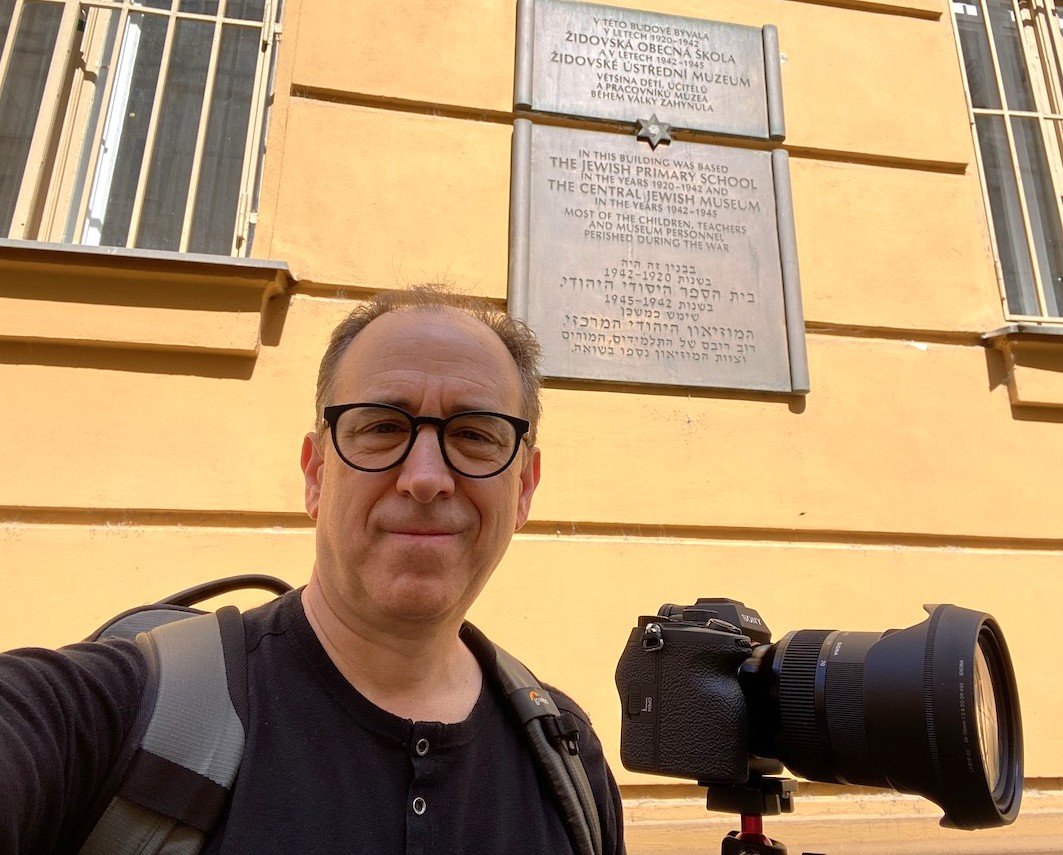
“The story that everybody seems to know wasn’t quite right,” says Bluestein. “This movie sets out to tell the real story of how these scrolls were saved. The most important thing is that it was not the Nazis who were planning this. It was a small group of Jews in Prague during the war that came up with a plan. They said, essentially, if we’re not going to survive, perhaps we could save our legacy.”
The film had its premiere on May 20 at the Hopkins Center for the Arts, and there are plans for at least one special screening at Bet Shalom. But Bluestein and his supporters hope it will find a much bigger audience ultimately.
“He’s an artist and this is a work of art, but it’s also a work of history,” said Bet Shalom Rabbi Emeritus Norman Cohen. “I’m a big fan of dispelling the myth because I feel guilty about promoting that myth.”
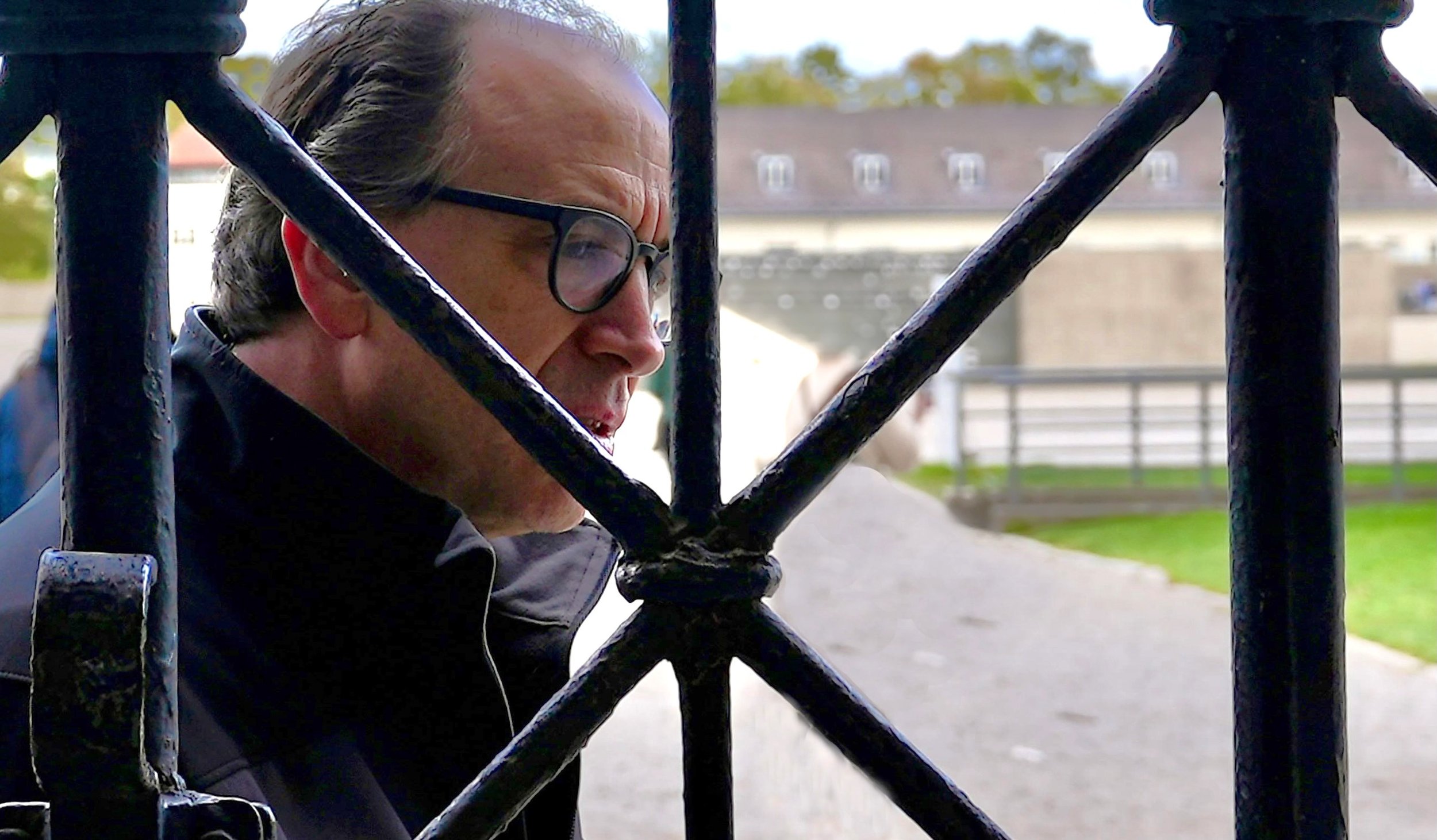
Dale-Dachau
The original story was easy enough to believe, Rabbi Cohen said, because “it fit into what people’s preconceived notions were of what they would imagine the Nazis were doing.” Yet Bluestein found an even greater story, he said. “Here were Jews being sent off to the camps, and they somehow managed to save these scrolls. How they did it is just an amazing story.”
At first, Bluestein said he was simply curious about the origin story of Bet Shalom’s Czech scroll, which came from the town of Klatovy. As a World War II buff, he said he had never before heard of any Nazi plans for a Jewish museum, so he turned to Google to learn more.
To his surprise, he came across an essay that argued there was no such Nazi plan. His first reaction: “Is this a denier? Someone who’s trying to save face for the Nazis?” But the article was legitimate, written by a research person at the Memorial Scrolls Trust.
It turned out that the historical record was more murky and full of gaps than it first appeared. For Bluestein, it sparked an obsession to find out what really happened. With the help of grants and the previous work of three other major researchers, he ended up chasing the story across Europe.
His documentary reveals how a small group of Jewish community leaders in Prague came up with a plan to save the Torah scrolls in 1942, as the Nazis were deporting Jews and destroying Jewish communities throughout the countryside. In an extraordinary turn of events, they persuaded the Nazi leaders in Czechoslovakia to allow them to collect the scrolls from the abandoned synagogues and store them in what was then the Jewish Museum of Prague.
By the end of the war, almost everyone involved in saving the Czech Torah scrolls had died in the Holocaust.
But the scrolls survived, “stacked floor to ceiling” in an abandoned synagogue near Prague. Thanks to a Jewish philanthropist named Ralph Yablon, they were brought to London in the 1960s to what became the Memorial Scrolls Trust Museum at Westminster Synagogue. And over the years, the Trust distributed scrolls to hundreds of synagogues around the world on permanent loan.
The myth of the Nazi museum apparently emerged in press reports after the war and took hold despite the lack of any real evidence, Bluestein said. “I think everyone agrees that there’s no documentation that this was going to be a Nazi plan,” he said. “This didn’t happen anywhere else in Europe. Everything else was destroyed.”
Yet the myth is still so widespread, he said, that many synagogues with Czech scrolls “have the wrong story.” He hopes his film will help correct that and bring light to the names of those who are responsible for saving the scrolls.
At Bet Shalom, Rabbi Cohen had the plaque changed years ago to reflect Bluestein’s discoveries. “I realized we’ve got to fix this,” he said.
Today, though, there is no historical plaque beside Bet Shalom’s Czech scroll, which was restored in 2019 and is once again in regular use. Now it has another story to tell, said Rabbi David Locketz.
“It stopped being a symbol when we removed it from its museum case on the wall and put it in the Ark,” said Rabbi Locketz. “We actually have an object that was important to a Jewish community, that survived — barely survived — and we were able to make it part of the ritual life of our synagogue.”
Rabbi Locketz also hopes the new film will help keep the story of the scrolls alive. “Dale has really single-handedly kept this story at the forefront,” he said. “He did an incredible job.”