
Rabbi Locketz Volunteer Leadership Positions
in MRA and at OSRUI
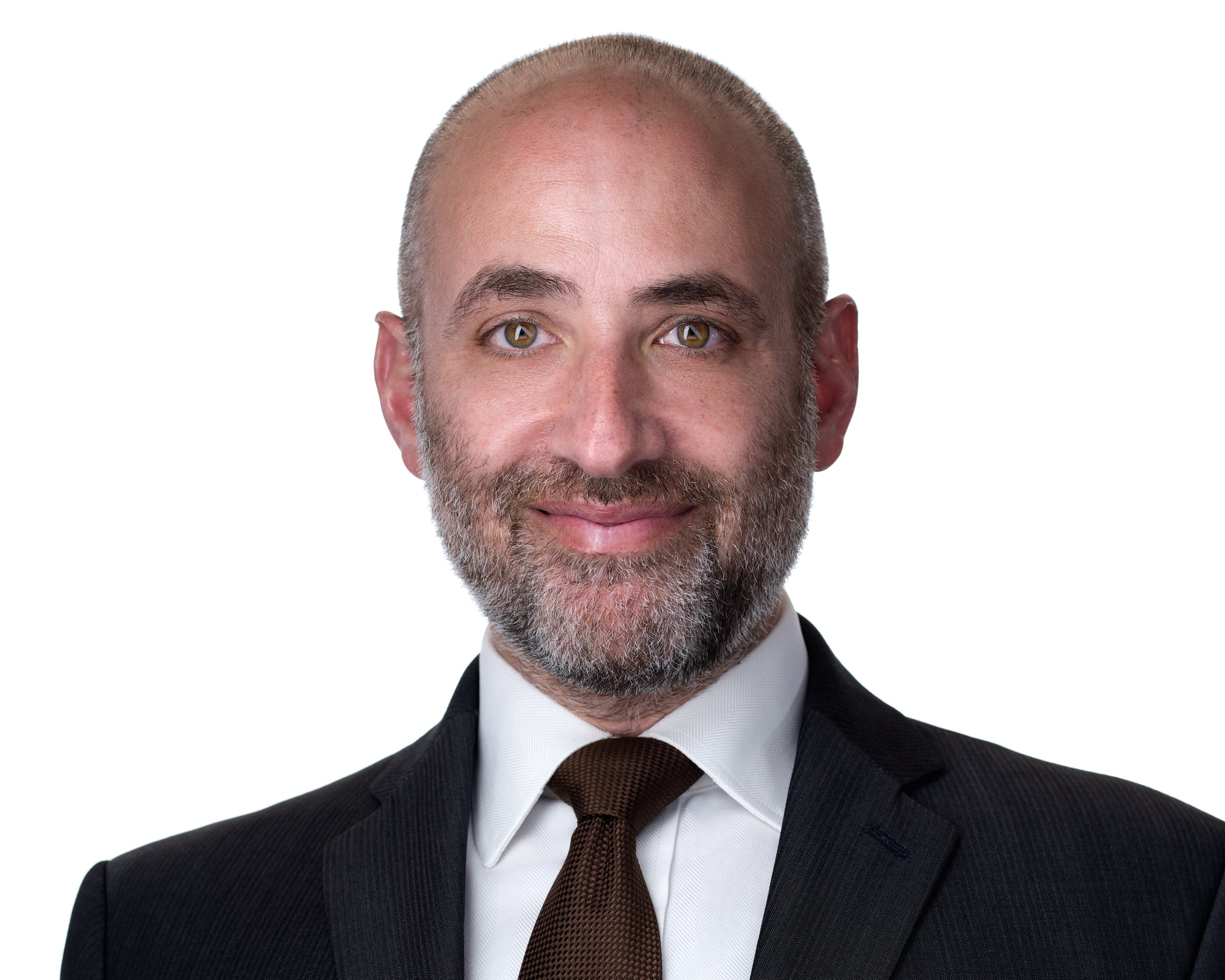
Rabbi David Locketz with Eric Bressler
Lots of us do volunteer work, often in the context of our professions. Recently I learned that Rabbi Locketz is in voluntary leadership positions in two rabbinical organizations. I interviewed him to share the details with our congregation.
You’ve been the Chair of the Minnesota Rabbinical Association (MRA) for over a year now. What does that organization do?
The MRA claims to be the moral and religious voice of the Jewish community in the State of Minnesota. We are comprised of 43 rabbis who, except for one, are non-orthodox. We have members who serve in Reform, Conservative, Reconstructionist, Modern Orthodox, and Humanist congregations. We meet monthly and confer more frequently through a list-serve on issues for the Jewish community in Minnesota and beyond, such as our response to antisemitism, issues in Israel, and political and advocacy issues here in town.
The MRA serves as a central address for the progressive Jewish Rabbinical community. For example, when the Minneapolis Jewish Federation wants rabbis to participate in an effort, they typically come to the chairs of the MRA.
How did you come to that position?
I had already served as the co-chair for a couple of years around 2008 and 2009. About a year ago there was a situation where one of the chair people had served an extra year because nobody stepped forward, and they announced they were not continuing. Then the other chairperson fairly abruptly changed jobs and moved out of town, so we were faced with a vacuum of leadership. I felt that it was important that somebody who had been in the community for a while step forward, so I threw my hat in the ring. Upon my acceptance, I went through a confirmation process.
How is the organization run?
As a co-Chair I am one of three people in the leadership structure. There are typically three rabbis at the helm, one as treasurer and two who serve as co-Chairs to convene the rest of the group.
What have been your initiatives this time?
I'm now in my second year as one of the chair people and am committed to leaving the association a little more sustainable than it was when I began this term as chair. We have been around for 100 years, but the community has changed a lot. And so our model needs to evolve too. I have convened a committee of all former chair people who still live in Minnesota to advise us on where we should put our capacity as a group of 43 rabbis. At the end of October we held a full day retreat for the first time in years. We discussed the realities of the Jewish community in this moment and where we all stand on important issues. It was a powerful experience, one of the things I am very proud of accomplishing as MRA co-chair.
I know you spend time every summer at Olin-Sang-Ruby Union Institute (OSRUI), the URJ camp in Oconomowoc, Wisconsin. But I just learned that you’re also Chair of the Rabbi, Educator and Cantor Committee there. What is that, and what do you do in that capacity?
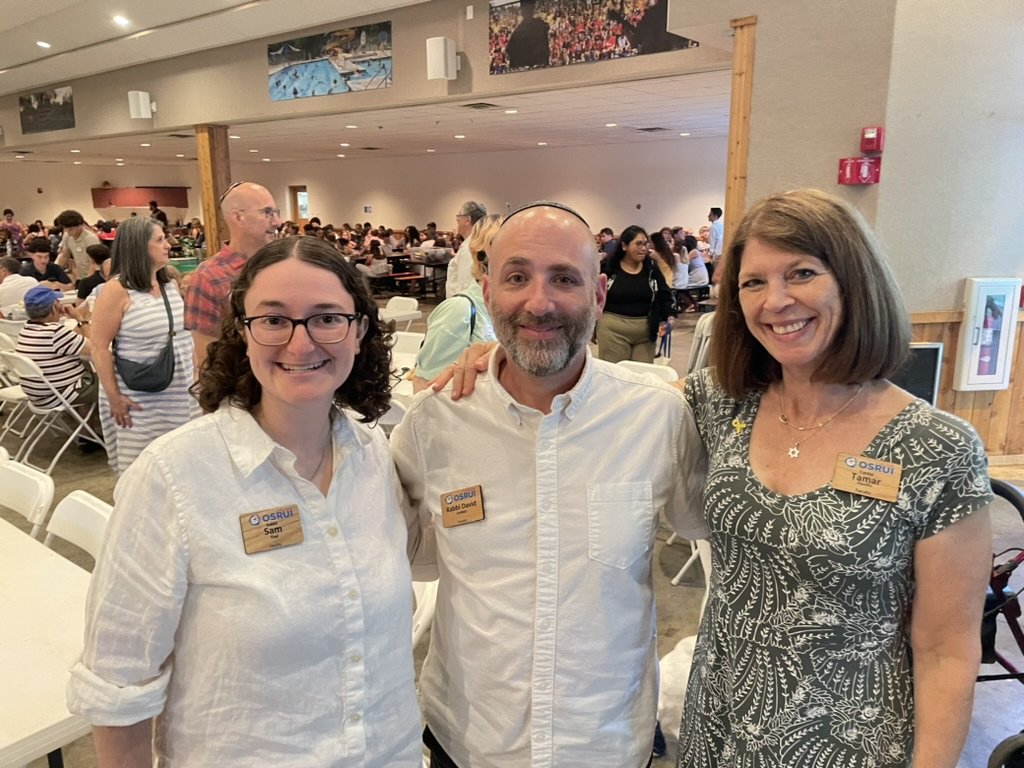
Clergy at OSRUI
The RECC supervises all of what we do to support Jewish life at camp such as services, educational programs and the immersive environment that we create there. My role for the RECC is primarily to be an advisor to the Director of the camp on behalf of the faculty. As chair of the faculty committee, I oversee the placement and management of the more than 50 rabbis, cantors and educators who spend time at camp during the summer. As chair I also sit on the OSRUI Board of Governors.
Were you elected to that position?
I was not elected as Chair of the RECC—I was nominated and I agreed. Ironically, I agreed to this role before realizing the need for my leadership in the MRA. I am honored to serve both in both roles. Perhaps it would've been better if it wasn't at the exact same time!
Until a few years ago, this was a position monitored by the Chicago Association of Reform Rabbis, so you needed to be a Reform rabbi in Chicago to be the Chair. At some point in acknowledgment of all of my years at camp and the number of kids that Bet Shalom has historically sent, I was asked to be the first non-Chicago Rabbi to serve in this role. Similar to being the chair of the MRA I am essentially the head of a board that serves to help fulfill the mission of camp through our professional roles in our congregations, and by extension what we do at camp. At Bet Shalom we consistently send 25% of our eligible student body to OSRUI every summer, so the success of camp and the participation of our clergy in our mission both here at home and at camp are intertwined.
How do these volunteer activities affect you professionally and personally?
I believe ultimately that these roles are really important to my rabbinate, to our congregation, and to the Jewish community at large. It's an honor to serve and to be confirmed by my colleagues in these voluntary roles.
What are their downstream impacts on Bet Shalom Congregation?
A few years into my rabbinate I participated in a fellowship through the S.T.A.R. Peer Support program. I recall a speaker to our cohort saying that the strongest Jewish leaders refer to the entire Jewish community when they use the word "we." We are part of a Jewish ecosystem that relies on the entire Jewish community's participation. Bet Shalom is a major part of my "we." But so is the wider Jewish community in Minnesota and the immersive environment we create in Oconomowoc at OSRUI for our students as they grow in their Jewish identities. I don't think it is possible to accomplish what Bet Shalom accomplishes in a vacuum. When I think about the vital elements that help create Jewish identity in our young, OSRUI is always part of the mix…not just HaMakom Bet Shalom (our supplemental religious school program) or what happens in our building. Bet Shalom has a long history of supporting OSRUI. I see my role as Chair of their faculty as ensuring that the opportunities there continue to exist for our current youth and the youth of the future.
As chair of the MRA, I work to ensure that our rabbinic community remains just that—a community of rabbis who lead our synagogues and organizations every day. Whether it is terror against Israel, a moral issue such as the reduction of our social safety nets, antisemitism, or public hatred against a minority group, we come together in the MRA and work to address it as a Jewish community. There is no doubt in my mind that our Jewish community is well organized and connected across Minnesota, and the MRA is one of the vehicles that helps us achieve that.